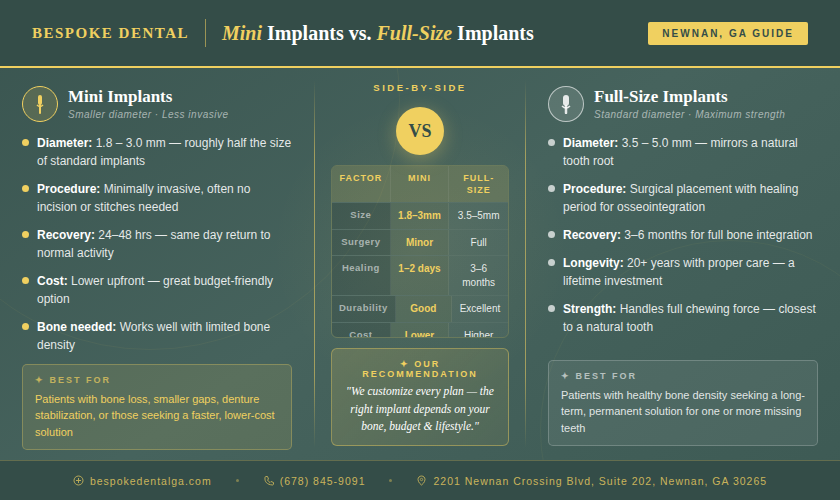
2201 Newnan Crossing Blvd Suite 202 Newnan, GA 30265

Why Bone and Sinus Grafting Is Essential for Long-Lasting Implants in Newnan
For instance, consider that you have long wanted to restore a missing tooth with the help of dental implant placement. So you go for the consultation feeling enthusiastic about enjoying the ability to bite, smile, or speak with confidence. However, in the process, the dentist throws an unexpected twist about needing to undergo a procedure called a bone or sinus graft before proceeding with the implant.
While you might feel surprised at this information, you should know that many patients do go through this procedure. Dental implants need strong support within the jawbone, much like how you would need strong ground beneath your foundation for your house to stand strong. A jawbone that’s too shallow in terms of height or too narrow might make it difficult for dental implants to attach correctly or even be stable.
Many people in Newnan have delayed dental treatment, have experienced tooth loss in the past, or have even experienced jawbone reduction, for whom this procedure can greatly help.
Understanding the Foundation of Dental Implants
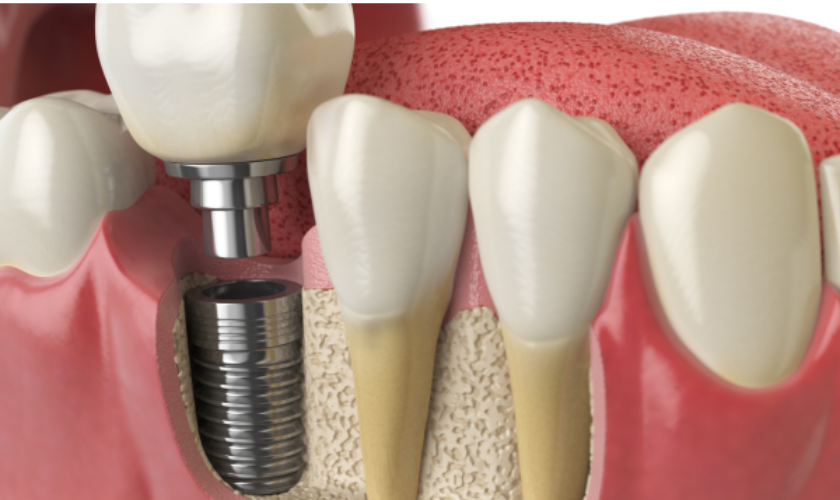
A dental or tooth root is similar to an implant. The dental root is fixed inside the jawbone. To ensure that it remains fixed and intact, there should be thick and stronger bone that will be able to hold and provide support even during healing and mastication. In cases where there is less strong bone and an implant is implanted, it may separate or may not be properly fixed.
The health of a jawbone is very essential and important when considering dental implants. This is due to an individual’s natural bone decreasing when there is a loss of a tooth. The loss of height and volume of the jawbone takes several years without teeth.
In some cases, where there is a loss of an upper molar, one may experience an expansion of the sinus area, filling the space. This procedure is difficult without undergoing an operation that will help restore back the jawbone. Patients who experience less bone density, due to past infections or when teeth are removed several years ago, undergo grafting.
What is Bone Grafting?
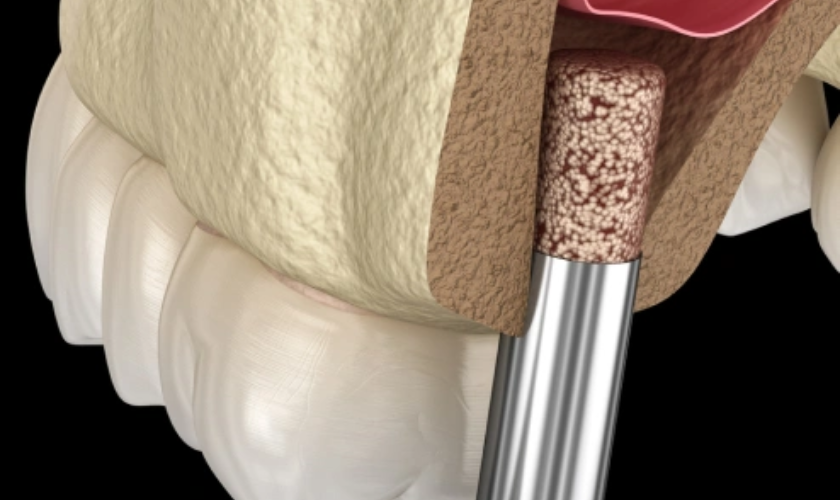
Bone grafting is another procedure employed to rebuild and densify regions of the jaw where bones have been reduced in size. It allows for sufficient support to merge comfortably with the dental implant. This procedure in dental implantation has much to do with bolstering soil before erecting structures.
The type of grafting employed is either harvesting from another portion on the same body or harvesting from another person. Another type of grafting employed is synthetic grafting. This type of grafting is known to stimulate new bone growth. Regardless of which type of grafting technique is employed, its purpose is to induce new bone growth in one’s body.
Over time, grafting boosts new bone to merge with existing bone, making bones denser. This would greatly assist people from Newnan who lost density in their bones due to missing teeth and gum disease.
What Is Sinus Grafting/Lift?
The maxillary sinus lies just above the back top teeth. When back teeth go missing in this region, it leads to reduced bone density below the maxillary sinus. As a consequence, this sinus tends to migrate lower into its bed. As a result, there would be very little room for an implant post.
In a sinus lift procedure, this sinus would be delicately pushed upwards, and grafting material would then be placed below it. In this way, new bone density would be formed. This would be sufficient to hide the implant adequately for it to be secure inside.
Many individuals with missing teeth for several years or with shallow bone density qualify for this treatment.
Many residents who would not be implant candidates receive new hope with bone and sinus grafting in Newnan.
Importance of Bone & Sinus Grafting to Attain Long-term Success
While investing in implants, the aim is not only focused on filling the gap but rather is centered on the longevity of the restoration that will endure for several decades. Grafting is an integral part that contributes to the functionality that the implants must be able to achieve.
Benefits include:
- Prevent implant failure
- Enhance bone density
- Facilitate stable integration
- Enhance the longevity of the implants
- Improved chewing efficiency and attractiveness
A good base is crucial for sustained oral function. If there is insufficient bone support to allow the implant to integrate properly with the bone, there can be pain or failure. The graft helps to offer denser bone for natural fusion of the implant screw to the bone.
After complete healing, patients can feel as if the implant is functioning just like natural teeth. Mastication becomes simple for patients. The biting force is stronger. The smile also looks normal.
What patients in Newnan want is effective solutions for their dental needs rather than temporary solutions for their conditions. Having the needed support system underneath the implant is essential. This is because, besides securing their implant, it is beneficial to their lifestyle as well, because eating barbecue from Fatboys Bar-B-Q or crunching an apple from the market over the weekend will no longer be a chore.
This is because Grafting ensures that all that is needed is created, and all implant patients deserve that.
Signs You May Need Bone or Sinus Grafting
Think about the following symptoms if you’re considering implants:
- Missing teeth for several years
- Weakness in the lower jawbone
- Previous infections or gum diseases
- Loss of a tooth due to trauma
- The upper teeth are missing. Requisite sinus lift.
If teeth are lost for an extended period of time, the jawbone ceases to have the stimulation of chewing activity. Over time, its response is to begin resorbing. One does not necessarily have to feel this process to understand its effect, but often X-rays reflect a shallow level of bone.
A jaw that is weak in this manner lacks the strength to maintain an implant on its own. Individuals who have had an accumulation of oral infections and gum disease may be left to suffer the consequence of lost bone mass as well. Back in the jaw’s upper area, missing teeth in the molar section have to have their sinuses elevated to accommodate an implant.
Many people living in Newnan have started treatment for implants, but then busy lifestyles cause a delay in treatment, only for them to find out they have a problem requiring more grafts before implants can be done.
One good thing, however, is that with grafting, people can still get implants despite losing bone mass. Digital scanning during consultation can determine the bone density of a person, and grafting can be needed based on the test result during consultation.
What to Expect During the Grafting Process
It begins with a full assessment, where X-rays or CBCT scans are used to analyze bone quality. Once treatment options are considered, the grafting procedure follows, which is pain-free thanks to local anesthesia.
The grafting material is then placed within the area of missing bone or behind the sinus membrane, depending on whether a bone lift is required. After the procedure, the area is then allowed to heal by itself, during which new bone formation occurs.
Patients are provided instructions on how to proceed, which include not using strong mouth washes, eating soft food, and taking medication where necessary. Usually, patients readily revert to their normal activities. Once the healing phase is over, patients are ready to proceed to the final part of placing the implants.
Timeline: Grafting to Implant Placement
The time it takes to heal depends on the quality of the bones and the type of procedure done. On average, the time span to integrate the bones could be a few months. The timeline is basic, comprising the following stages: consultation/imaging, grafting procedure, healing period, implant procedure, and finally the crown installation.
While the grafting procedure increases the overall time span to perform the dental implant procedure, overall, it is beneficial to have a successful procedure in the end. After installation, the dental implant merges with the bones to provide anchor strength to the fixed crown that will be placed on top after full recovery. It will be able to chew food with ease, smile proudly in family photos at Ashley Park, or dine with family at a local Nnan restaurant, among others.
This means that a dental implant’s success can be effectively measured through a solid foundation that ensures its functionality for a long lifespan. Several dental procedures, including bone grafts and sinus grafts, allow dental implants for people who would not be suitable candidates due to low bone mass.
Regardless of when a tooth has been lost, grafts ensure a healthy smile for years to come. If you’re thinking of getting dental implants and would like to learn about whether you qualify, the first thing you should do is schedule a consultation.
Our dental professionals are here to assist and guide you every step of the way. A great smile should last an entire lifetime. Our Newnan dental specialists are ready to assist you in making this dream come true.
FAQs
Can older adults receive bone grafts for implants?
Age is not usually a barrier. Health and bone quality matter more than age.
How long after grafting can I chew normally?
Soft chewing begins early, but full bite pressure should wait until the implant and graft fully heal.
How does grafting make implants last longer?
A strong bone foundation helps the implant fuse securely, reducing the risk of complications later.
Can smokers get bone grafts?
Smoking slows healing, but grafting is still possible with precautions and support for quitting or reducing use.
Will grafting affect my daily routine?
Patients usually resume normal activities soon after, avoiding heavy exercise until cleared by a dentist.