2201 Newnan Crossing Blvd Suite 202 Newnan, GA 30265


Your Jaw Is Shrinking: Five Signs You’ve Waited Too Long for Implants
Most people assume a missing tooth is just a cosmetic problem. They think they can deal with it later. But the longer you wait, the more your jaw quietly changes beneath the surface. If you’ve been putting off implants in Newnan, your body may already be sending you warning signals you shouldn’t ignore.
At Bespoke Dental Newnan, Dr. Cindy Rask sees this pattern often. Patients come in thinking they missed a minor window. Many discover they’ve lost more bone than they realized. Understanding these five signs can help you act before your options become more limited.
Why Waiting Too Long for Implants in Newnan Costs You More Than You Think
When a tooth root disappears, the jawbone loses its stimulation. Bone needs pressure to stay dense and healthy. Without a tooth root sending signals, the body reabsorbs that bone tissue. This process begins within the first few months of tooth loss.
By the end of the first year, you can lose up to 25% of bone width in that area. The losses compound over time. What started as a simple extraction site becomes a structural problem. That is why timing matters so much with dental implants.
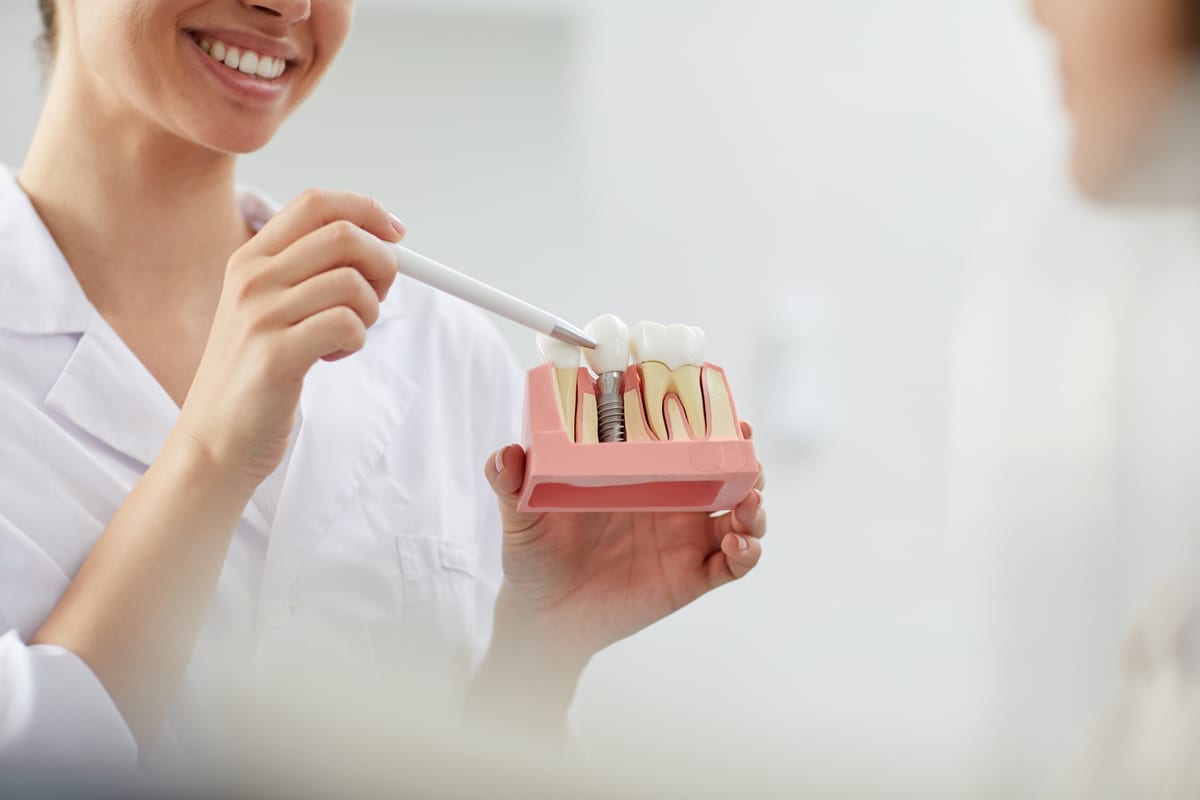
Implants replace the root, not just the crown. They restore the stimulation your jaw needs. Acting sooner preserves more bone and makes the implant process simpler. Waiting does the opposite.
Sign One: Your Face Looks Different Than It Used To
Bone loss changes more than your dental X-rays. It changes your face. The jawbone supports the lower third of your facial structure. When it shrinks, soft tissue follows it inward.
You may notice your cheeks look hollowed. Your chin might appear more prominent. Some patients describe their lower face as looking sunken or aged. These changes often appear gradually, so people blame time rather than their missing teeth.
If you’ve noticed a visible shift in your facial profile, bone resorption may already be significant. A consultation with Dr. Rask can confirm how much bone remains. Early imaging tells the real story before it gets harder to treat.
Sign Two: Your Remaining Teeth Are Shifting or Feel Loose
Teeth are social creatures. They rely on each other for stability. When one tooth disappears, the neighboring teeth begin to drift toward the gap. This movement is slow but relentless.
- Adjacent teeth tilt into the open space
- Opposing teeth over-erupt downward or upward to fill the gap
- Your bite alignment changes over time
- Shifting creates new pressure points that wear enamel unevenly
That shifting puts stress on the periodontal ligaments around healthy teeth. Over time, those teeth can loosen. What began as one missing tooth can cascade into multiple compromised teeth. The sooner you restore the gap, the sooner you stop that chain reaction.
Sign Three: Chewing Has Become Genuinely Difficult
Many patients adapt to missing teeth without realizing it. They unconsciously avoid certain foods. They chew only on one side. They cut everything into tiny pieces just to get through a meal.
This compensation creates new problems. Chewing on one side puts uneven stress on that jaw joint. It can contribute to TMJ pain and headaches. Meanwhile, avoiding hard foods like raw vegetables limits your nutrition.
If eating has quietly become a challenge, your body is telling you something. Difficulty chewing is one of the clearest signs that your jaw has already been compromised. Implants restore full chewing function in a way that bridges and dentures simply cannot match.
- Implants fuse with the jaw for stable, root-level support
- They allow you to bite with natural force
- No slipping or rocking like removable appliances
- They protect neighboring teeth from overuse
Sign Four: Your Gums Are Receding Around the Gap
Bone loss doesn’t stay invisible forever. As the ridge beneath your gums shrinks, the gum tissue recedes with it. You may notice the gap looks wider or deeper than it once did. The gum line in that area appears lower than your surrounding teeth.
Receding gums in an extraction site signal significant resorption. They also expose nearby tooth roots to bacteria. That increases your risk of gum disease and decay in otherwise healthy teeth. Gum Disease Treatment becomes more urgent when bone loss is already present.
The good news is that bone grafting can often rebuild lost volume before implant placement. But that adds steps and recovery time. Patients who act earlier often avoid grafting entirely. That means fewer appointments, less discomfort, and lower overall treatment complexity.
Sign Five: You’re Experiencing More Dental Emergencies
Patients with untreated bone loss tend to visit an Emergency Dentistry Newnan provider more frequently. Cracked teeth, broken fillings, and sudden pain become more common. This happens because shifting teeth and uneven bite force stress every remaining tooth.
Each emergency is a warning that your overall dental health is under strain. Treating individual crises without addressing the root cause is like patching a leaking pipe without fixing the water pressure. Your jaw needs structural restoration, not just repeated repairs.
If you’ve had multiple unexpected dental problems in recent years, take stock of what’s driving them. Missing teeth and bone loss are often the common denominator. A comprehensive evaluation can reveal whether implants are the long-term solution your mouth actually needs.
What Comes Next: Your Implant Evaluation at Bespoke Dental Newnan
Dr. Cindy Rask takes a thorough, patient-centered approach to every implant consultation. She uses digital imaging to assess your current bone density. She reviews your full dental history and listens to your concerns without rushing you.
If bone loss is present, she’ll discuss your grafting options clearly. If you’re a good candidate for implants now, she’ll walk you through every step of the process. The goal is always to give you complete information so you can make the best decision for your health.
Many patients also ask about cosmetic improvements alongside implants. Pairing implant treatment with Teeth Whitening Newnan is a popular option for patients who want a complete smile refresh. Dr. Rask can discuss what combination of services makes sense for your goals.
The most important step is simply starting the conversation. Bone loss doesn’t pause while you wait. The sooner you get accurate information, the more options you have available. Book Now to schedule your appointment with our team.
Frequently Asked Questions
How quickly does jaw bone loss start after losing a tooth?
Bone resorption typically begins within the first few weeks after tooth loss. By the end of the first year, you can lose up to 25% of bone width in that area. The process continues gradually over the following years if the gap is not restored with an implant or another root-replacing solution.
Can bone loss be reversed before getting a dental implant?
In many cases, yes. Bone grafting can rebuild lost volume and create a stable foundation for an implant. The amount of grafting needed depends on how much bone remains. Patients who act sooner often require less grafting or none at all, which simplifies the overall treatment process.
Are dental implants suitable for everyone with missing teeth?
Most healthy adults with adequate bone density are good candidates for implants. Certain health conditions and habits, like uncontrolled diabetes or smoking, can affect healing and candidacy. Dr. Cindy Rask evaluates each patient individually to determine the most appropriate treatment path based on their specific situation.
How do I know if my teeth are shifting due to a missing tooth?
Common signs include changes in your bite, difficulty closing your teeth together comfortably, food getting caught in new places, and visible gaps between teeth that weren’t there before. A dental examination with updated X-rays can confirm whether shifting has occurred and how much movement has taken place.
What happens if I choose a bridge instead of an implant?
A dental bridge replaces the visible crown but does not restore the tooth root. Without a root, the jawbone beneath the bridge continues to resorb over time. This can cause the bridge to feel less stable as the years pass and may affect the long-term health of the supporting teeth. Implants are the only option that addresses bone loss directly.